
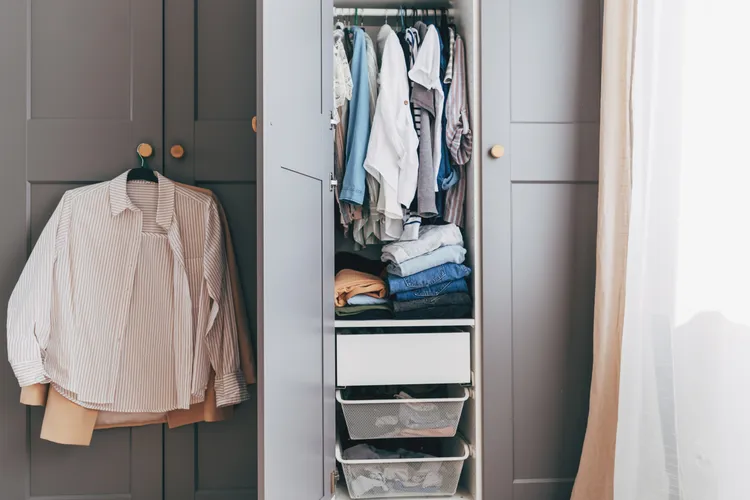
It’s Probably Been Years Since You Organized These 7 Spots in Your Home—Experts Say It’s Time
Home organization isn’t a one-time project—it’s an ongoing cycle of clearing, sorting, and rebalancing. There’s always some drawer or cabinet that could use attention. Most areas eventually get their turn.
But then there are the forgotten zones—the spaces and objects that slip out of awareness entirely. Out of sight, out of mind for years at a time, sometimes five, sometimes even a decade. And in many homes, some have never been properly sorted at all. It’s time to bring them back into focus.
01 of 07
The Spare Bedroom Closet
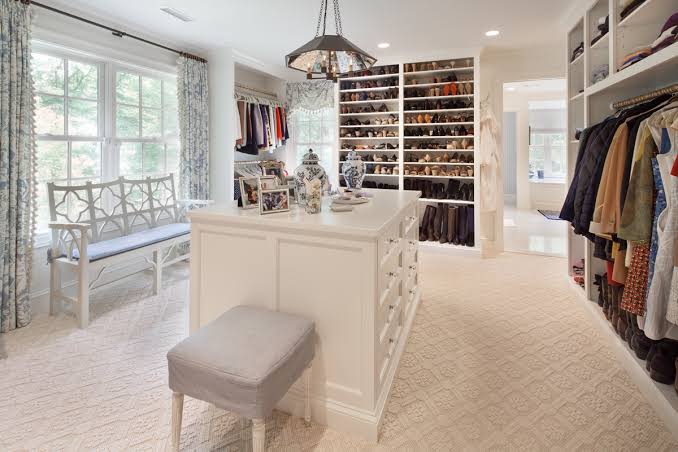
The spare bedroom closet is one of those quietly accumulating spaces that rarely gets questioned. The room itself may only be used occasionally, and the closet even less—making it an easy landing spot for items with nowhere else to go.
“Spare bedrooms are one of the easiest places in the home for clutter to collect,” says Charlotte Slankard, professional organizer and founder of Char & Co. “Since they’re used less often, it’s common for things that don’t have a home to get placed there ‘for now’ and then never leave.”
Her approach is simple but decisive: define the purpose of the room first, then allow only what supports that purpose to remain. Everything else should be relocated or stored intentionally. For overflow items, a labeled bin system can help prevent the space from quietly becoming a long-term storage unit.
02 of 07
Your Product Manual Pile
Few household archives grow as silently as the stack of manuals, warranties, and product leaflets tucked into drawers or boxes. They’re kept “just in case”—and then almost never seen again.
“This may be the rare organizing project where the best outcome is throwing most of it away,” says Robin Murphy, house cleaning expert. “Many manuals are available online now, and warranty information is often connected to a receipt, retailer account, or manufacturer registration.”
A practical alternative is digitization: photographing or scanning important documents and storing them electronically. At minimum, anything tied to items you no longer own can be confidently discarded.
03 of 07
The Linen Closet
The linen closet often hides an uneven mix of mismatched sheets, worn towels, and forgotten duplicates. It raises a simple but uncomfortable question: how much of this do you actually need?
In most households, two complete sheet sets per bed is sufficient outside of seasonal rotation. Anything incomplete—missing pillowcases or single sheets—rarely serves a purpose and can usually be removed.
For towels, heavily worn items can be repurposed for cleaning tasks around the house. Others may be suitable for donation, including local animal shelters that often welcome fabric supplies. Anything mismatched or unused should either be donated or reused rather than stored indefinitely.
04 of 07
The Hallway Closet
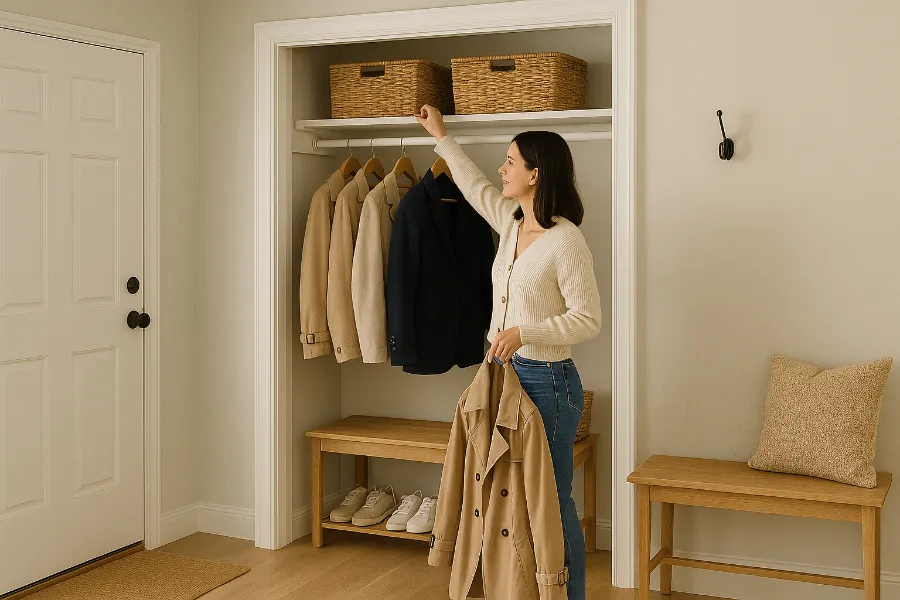
Because it sits in a central, high-traffic area, the hallway closet tends to collect items gradually until it becomes background noise. It’s used often enough to stay relevant—but not often enough to stay organized.
“In my opinion, hallway closets are prime real estate,” says Kat Green, organizing specialist and coach. “Because they are centrally located and easy to access, they can be a great place to store frequently used essentials such as toiletries, medications, first-aid supplies, extra linens, or household products.”
Her recommendation is to reassess this space at least twice a year—or sooner if finding items becomes difficult. Regular resets keep it functional instead of chaotic.
05 of 07
Your Reusable Tote Bag Stash
Reusable bags tend to multiply quietly. One goes into a car, another into a cabinet, a few more into random corners—and before long, you’ve built an unintentional collection.
“Pull them all out from the car, closets, pantry, and wherever else they’ve landed,” Murphy advises. “Keep the ones that are sturdy, clean, and easy to carry. Most households only need a small collection for regular shopping.”
Damaged or worn-out bags can be recycled where facilities allow. Excess usable ones can often be donated to community organizations, food pantries, or thrift stores that accept them.
06 of 07
Under the Bathroom Sink
The space beneath the bathroom sink is a classic catch-all—useful, hidden, and therefore easy to overfill. Over time, products get pushed to the back, duplicates appear, and the space loses all sense of structure.
“Over time, bathroom and cleaning products can get pushed to the back, duplicates can accumulate, and the space under the sink can become more cluttered than most people realize,” Slankard says. “Since under-the-sink cabinets often become catch-alls for extra toiletries and supplies, it’s a good idea to go through them every few months to prevent clutter from building up.”
Her method starts with a full clear-out. Once everything is visible, items can be grouped by category and returned in small containers or bins to maintain order.
07 of 07
The Junk Drawer
Every home has one—and it rarely lives up to any standard of organization. The junk drawer becomes a resting place for all the small, miscellaneous objects that don’t belong anywhere else.
“A well-organized junk drawer can actually be one of the most useful spaces in the home,” Green says. “It is the perfect place for small items you reach for regularly, such as measuring tape, pens, scissors, package clips, stamps, and a small flashlight.”
Her advice is to reset it every three to six months so it remains a functional tool rather than a chaotic catch-all. With regular attention, even the junk drawer can earn its name honestly.