
My Junk Drawer Was a Total Disaster Until I Started Using This Simple Organizing System
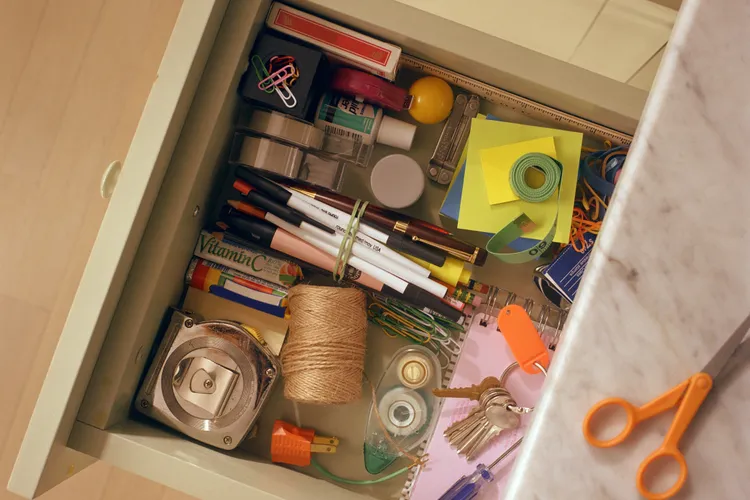
I used to envy the rare person who doesn’t have a junk drawer—the mythical type whose cabinets close effortlessly and whose homes seem to run on quiet, invisible order. Most of us, though, live with at least one: usually tucked into the kitchen, quietly absorbing charging cables, loose tools, random gadgets, and objects whose origins nobody can quite explain.
In reality, the junk drawer is less a flaw and more a universal feature of home life. Still, that doesn’t mean it has to stay chaotic. I learned this firsthand after finally bringing some structure to mine with a surprisingly simple system that requires almost no upkeep. Here’s how it works.
The Easy Fix That Organized My Junk Drawer
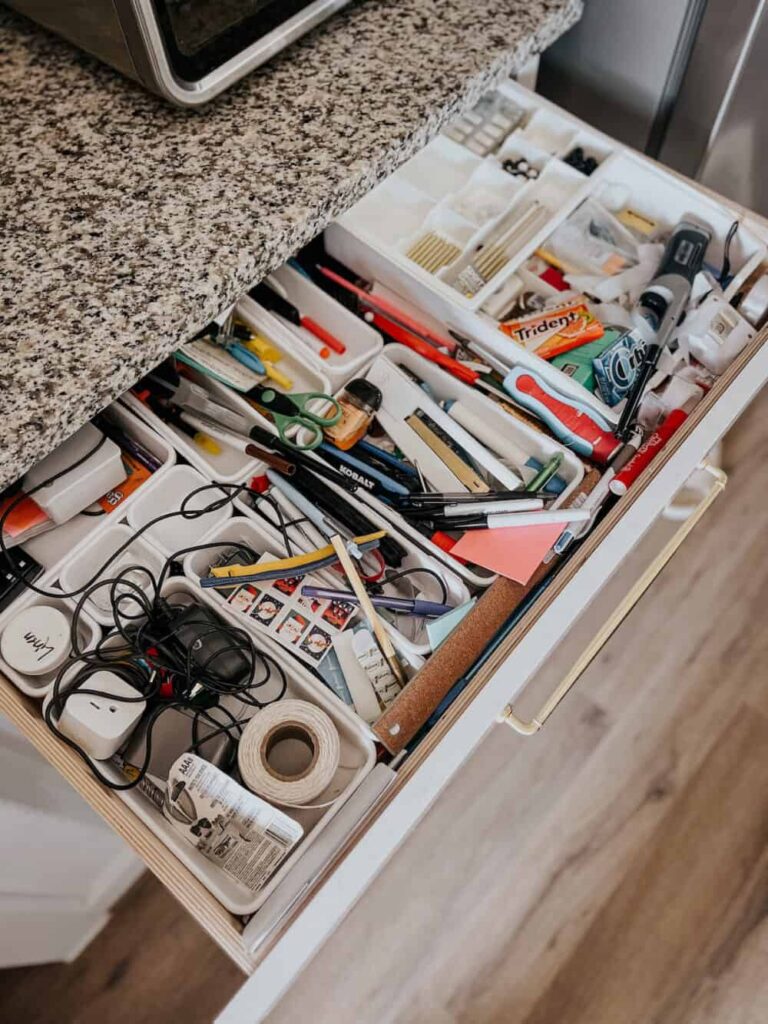
The most effective solution I found for taming my once-chaotic drawer was straightforward: I started using small containers to separate everything.
These compact bins act like gentle boundaries. They don’t demand perfection, but they do force a basic structure onto the chaos. Each container might not look flawless inside, but together they create a surprisingly cohesive system—what I like to call a grid of “controlled clutter.” And because they’re mostly square or rectangular, they maximize every inch of drawer space. Round containers, as many organizing experts note, tend to waste precious corners by not sitting flush against straight edges.
From there, the system becomes flexible. You can group items by category—cooking tools, stationery, hardware—or simply by size. I ended up using a mix of both approaches. One container holds a loose collection of bar tools and wine accessories, while another long, narrow tray corrals slim, easy-to-lose items like box cutters and mini rulers. The result is simple: everything has a place, and finding things takes seconds instead of minutes.
One of the most useful aspects of this setup is its adaptability. The containers aren’t fixed in place, so you can shift them around as your needs change. Seasonal or rarely used items can be pushed to the back, while everyday essentials stay within easy reach. It’s a bit like solving a small spatial puzzle—but once it clicks, the payoff is immediate.
Before buying anything, though, it’s essential to measure your drawer carefully. Height in particular can make or break the system. And just as important: declutter first. There’s no point organizing items you should probably discard. Duplicates, broken tools, and forgotten odds and ends should go before a single container is purchased.
How to Maintain Your Junk Drawer
Once the structure is in place, the real challenge becomes keeping it that way. Fortunately, maintenance is far easier than the initial cleanup if you follow a few simple habits.
Be Selective About What Goes In
Over time, it’s easy for a junk drawer to become a landing zone for anything without a clear home. In my case, even small products I was sent for testing eventually ended up there. Now, I’ve learned to slow that process down by asking a few quick questions before adding anything new.
Will I realistically use this within the next six months? Do I already own something that can do this job? And most importantly—do I actually have space for it? These small moments of hesitation act as a filter, preventing clutter from entering in the first place.
Don’t Aim for Perfection
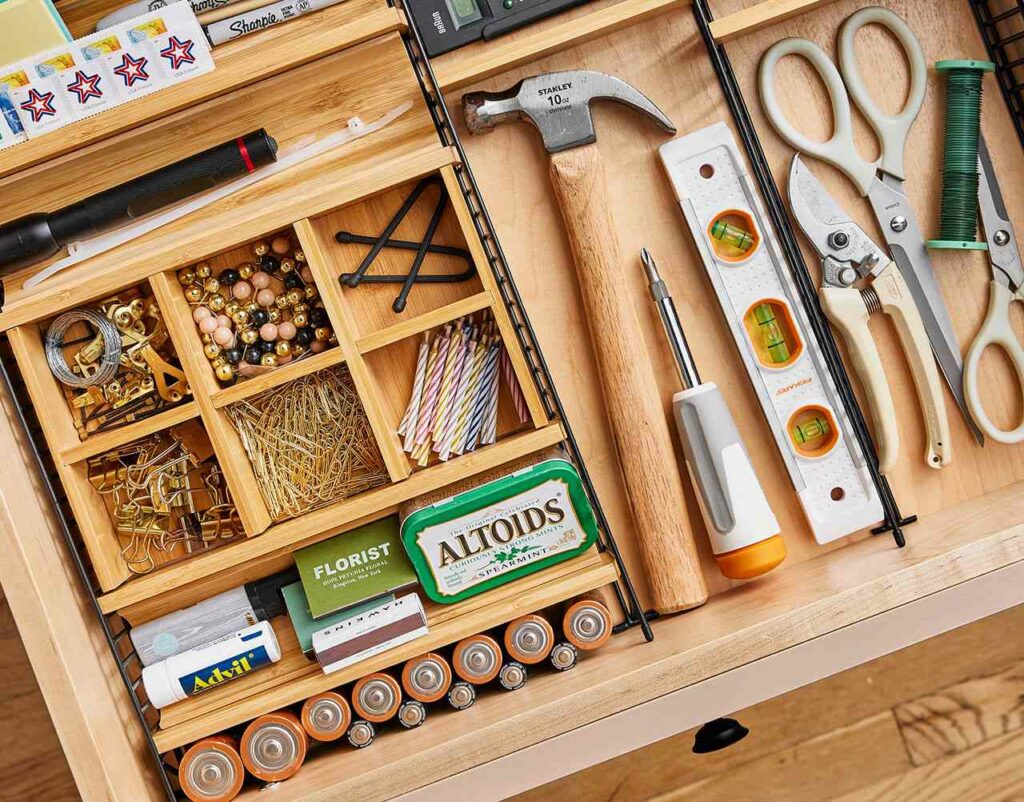
One of the biggest mistakes is expecting the system to stay perfectly curated. It won’t. Occasionally, an item will end up in the “wrong” container or share space with unrelated objects. That’s fine. The goal isn’t perfection—it’s visibility.
Even a loosely organized container is infinitely more functional than a buried pile of mixed items. When the system becomes too rigid, it becomes harder to maintain—and that’s usually when it collapses entirely. Practicality beats precision every time.
Get Everyone in the House on Board
A system only works if everyone uses it. That means making sure other people in the household understand where things belong. If necessary, simple labels help—no need for anything elaborate. Even strips of painter’s tape with handwritten notes can clearly define each category and prevent confusion.
Reassess Every Few Months
Even the best-organized junk drawer drifts over time. Every few months, it helps to do a quick reset. The good news is that because the space is small, this rarely takes more than 10–15 minutes.
A brief periodic check-in is often enough to prevent clutter from quietly rebuilding itself—and it ensures the drawer remains what it was meant to be: useful, not chaotic.